A no start can come from battery power delivery, starter control, security authorization, fuel delivery, ignition output, sensor signals, or engine mechanical timing. The right fix depends on what testing proves.
We confirm what the vehicle does when you turn the key, then follow a step by step test path to isolate the failed circuit or system. You get clear results and repair options based on evidence.
Serving drivers in Lynchburg, Boonsboro, Wyndhurst, Peakland, Rivermont, Forest, Timberlake, Madison Heights, and Bedford.
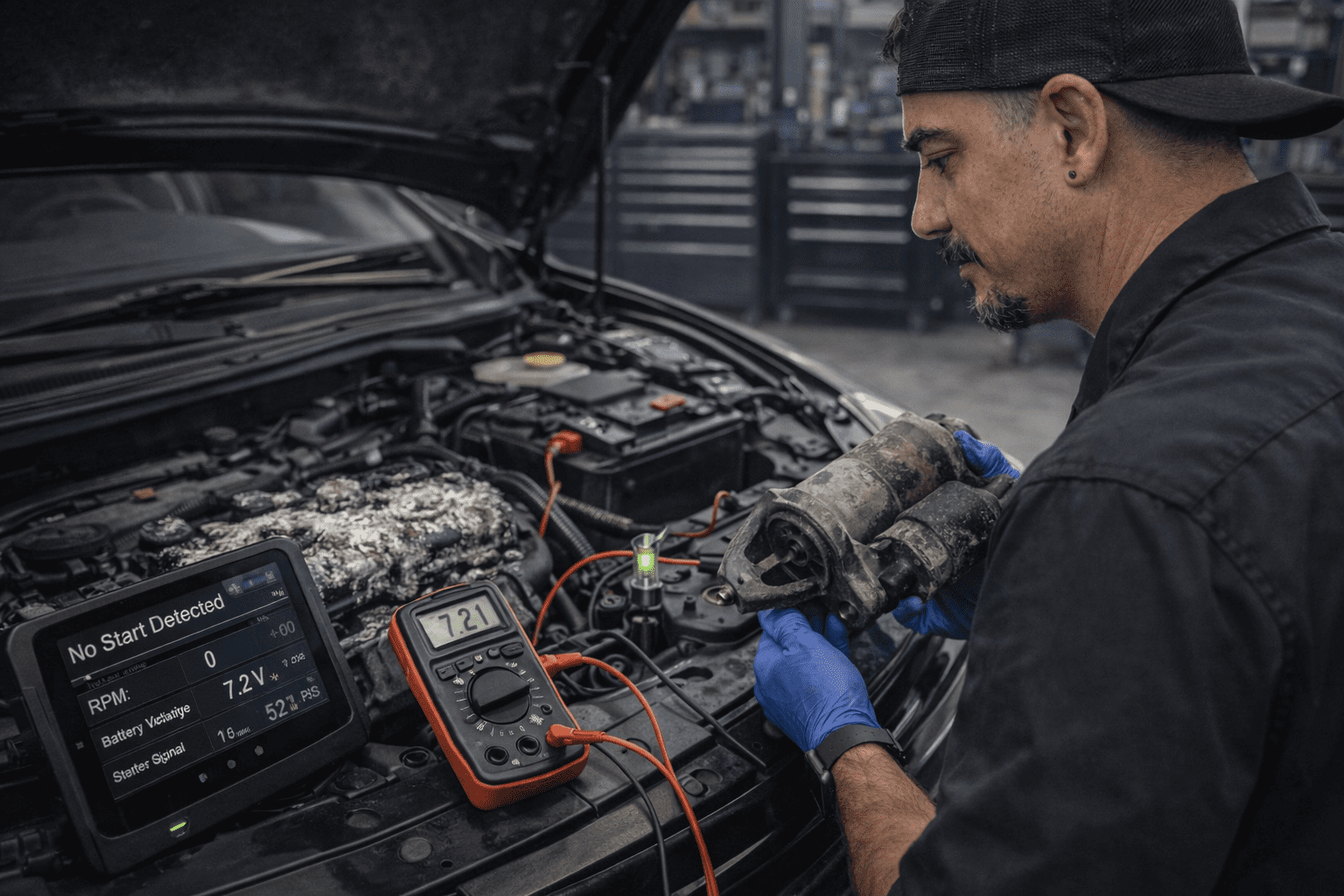
No start is a symptom, not a diagnosis. Some vehicles do nothing when you turn the key. Others crank normally but never fire. The correct repair depends on which system fails first.
A clear description of what you hear and see at key on helps us reproduce the issue faster.
We frequently handle no start concerns for Peakland, Wyndhurst, and Boonsboro drivers where intermittent electrical issues can be hard to pin down without load testing.
We use a structured test plan that proves where the chain breaks.
We list these because they are common, but we only recommend repairs after proof.
Use these pages to match related symptoms and stay inside the engine cluster.
No crank means the starter is not turning the engine. Crank no start means the engine turns but does not fire. That one detail determines whether we focus on starter control or fuel and spark.
Yes. A weak battery can show normal lights but fail under starter load. Load response and voltage drop testing confirm the battery and cable integrity.
Intermittent no start often points to a connection issue, heat related component failure, or a relay control problem. Testing during the failure is the fastest way to prove the cause.
Yes. A starter motor or solenoid can fail without setting a fault code. We verify command and power delivery, then confirm the starter response.
Sometimes, but not always. Many no start causes are electrical power or control issues that do not set a code. We use scan data plus circuit testing to confirm the fault.
Tell us whether it cranks, whether it clicks, whether it happens hot or cold, and whether a jump start changed anything. Those details help us build the correct test plan.
Repeated attempts can overheat the starter and drain the battery. If the vehicle is not starting, schedule diagnostic testing so we can prove the cause and avoid secondary damage.
If your vehicle will not start, we can separate battery and starter issues from fuel, spark, or authorization problems with a testing first approach. Serving Lynchburg with support for Rivermont, Forest, and Bedford drivers.