Knocking and ticking noises can come from valvetrain operation, timing components, oil pressure delivery, belt driven accessories, exhaust leaks, combustion knock, or internal wear. The sound alone is not enough to guess the fix.
We identify the type of noise, where it originates, and what conditions change it. Then we test the systems that control lubrication, timing, and combustion so you can make the right next decision.
Serving drivers in Lynchburg, Boonsboro, Wyndhurst, Peakland, Rivermont, Forest, Timberlake, Madison Heights, and Bedford.
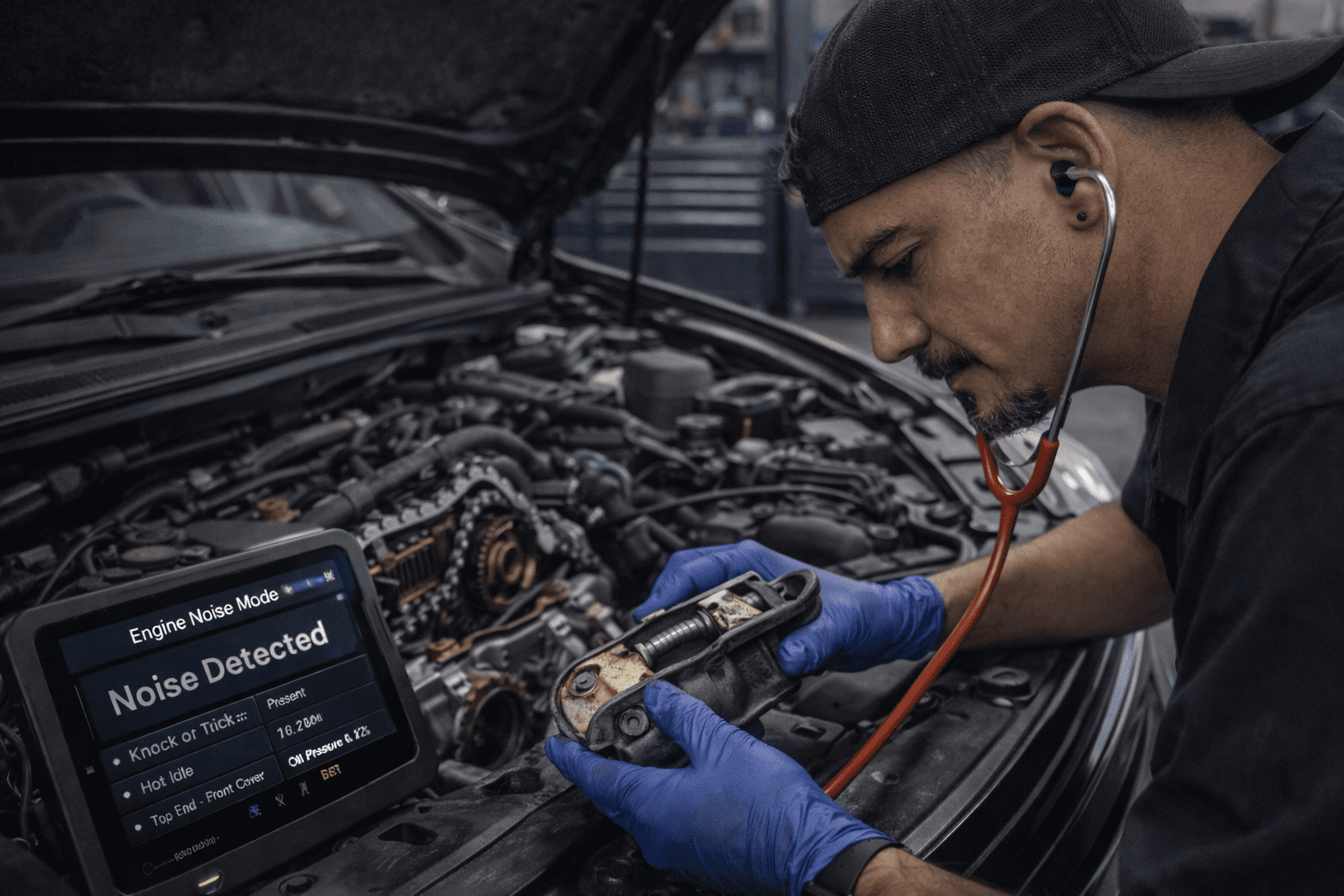
A ticking noise often relates to valvetrain motion, timing components, oil delivery, or an exhaust leak that mimics a tick. A knock can be combustion related or internal mechanical. We verify which one it is before repairs.
Multiple problems can sound similar. Testing confirms whether the source is internal, accessory driven, lubrication related, or combustion related.
We commonly see engine noise concerns from Rivermont, Forest, and Timberlake drivers where longer commutes can expose oil pressure and wear related patterns.
We confirm the noise, identify its source, and verify the system behind it.
Use these pages to match related symptoms and build a complete picture.
No. Ticking can come from valvetrain motion, timing components, an exhaust leak, or an accessory. We verify oil level and oil pressure when the pattern points there.
A tick is usually a sharper higher frequency sound often tied to top end or leaks. A knock is usually deeper and may relate to combustion or internal wear. Testing confirms the source.
Yes. A small leak near the manifold can mimic a tick and often changes with load. We locate the source before recommending engine repairs.
If the noise is new or getting louder, reduce driving and schedule testing. Some knocks indicate conditions that can cause rapid engine damage if ignored.
Scan data can help identify combustion knock control, misfire, or timing issues, but noise location testing is still required to confirm the mechanical source.
Oil thickness and clearances are different when cold. Some timing and valvetrain noises appear at start up then fade. We test under the same cold start condition to confirm the cause.
Record when it happens, cold or hot, idle or load, and whether it changes with RPM. That information helps us reproduce the noise and shorten diagnosis time.
If you hear knocking or ticking, start with testing that proves the source before repairs are chosen. Serving Lynchburg with support for Boonsboro, Peakland, and Forest drivers.