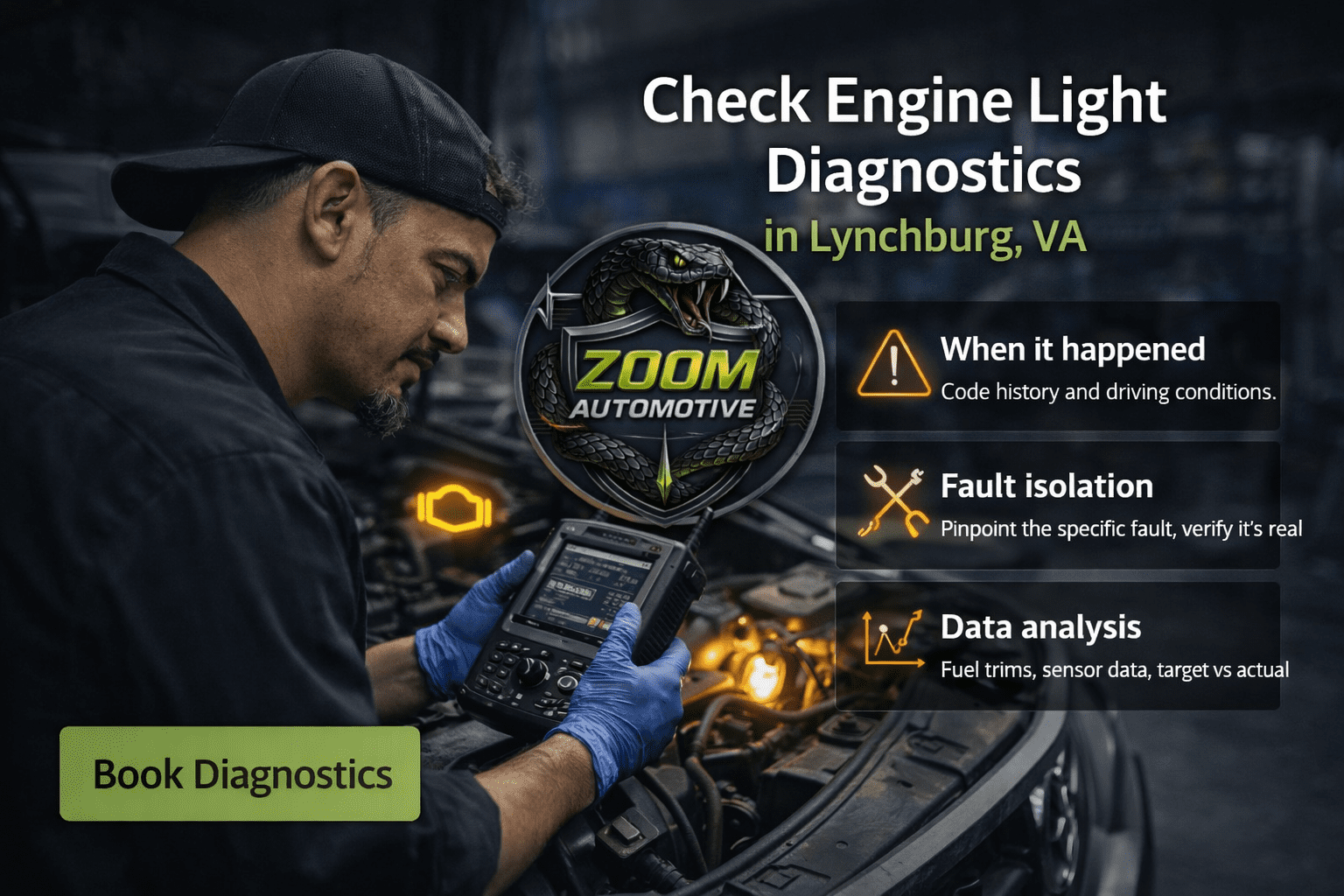
What the light means
A fault was detected in an engine or emissions related system. Testing confirms the actual cause.
What we verify
Codes, freeze frame data, live data trends, and the specific system tests that match the evidence.
When it is urgent
If the light is flashing, limit driving. Active misfire can damage the catalytic converter.
What a code does and does not tell you
A code is a starting point. It points to a system that needs verification. It does not automatically identify the failed part.
Accurate repairs come from testing.
- Codes identify a system or condition
- Freeze frame shows when it happened
- Live data shows what the sensors report now
- Verification tests confirm the root cause
Symptoms often seen with a check engine light
- Rough idle
- Engine shaking
- Loss of power
- Surging or hesitation
- Stalling
- Reduced fuel economy
If the light is flashing, the next step is often verified
engine misfire diagnosis
.
Our diagnostics first process
- Confirm the concern and capture symptom pattern details
- Pull codes, freeze frame data, and readiness status
- Review live data for plausibility and trends
- Run targeted system tests based on the evidence
- Document findings and explain repair options with priorities
We often see this concern in Wyndhurst, Peakland, and Rivermont when drivers want an accurate answer before parts are replaced.
Common root causes we find
- Ignition misfire from spark plugs or coils
- Fuel delivery issues including injector performance
- Air leaks affecting fuel trims
- Sensor drift affecting fueling calculations
- EVAP system leaks or control faults
- Mechanical concerns verified by testing
Related engine diagnostics
If your check engine light is paired with a specific symptom, use the matching page below. Each one explains the testing path and the next step.
Check engine light FAQ
Can I keep driving with the check engine light on?
If it is flashing, limit driving and call. If it is steady, it may be safe short term, but schedule diagnostics soon to prevent damage.
Does a code tell you what part to replace?
No. A code points to a system. Testing confirms the root cause before repairs are recommended.
Will clearing the code fix it?
Clearing may turn the light off, but the condition usually returns because the cause was not corrected.
Is a flashing check engine light serious?
Yes. Flashing often indicates active misfire that can damage the catalytic converter. Verified misfire testing is the next step.
Can a loose gas cap cause the light?
Sometimes. EVAP faults can be triggered by a loose or damaged cap, but the system still needs verification to confirm the leak source.
Do you diagnose drivability issues too?
Yes. If the vehicle has rough running, stalling, poor power, or reduced fuel economy, we test and build a plan based on evidence.
Book check engine light diagnostics
Start with verified testing and a clear plan. We serve Lynchburg, Forest, and Madison Heights with calm communication and diagnostics first decisions.