Engine surging is unstable power or RPM that rises and falls. It can be caused by airflow errors, fuel control problems, throttle control faults, vacuum leaks, sensor signal issues, or misfire under certain loads.
We reproduce the surge and use scan data, fuel trim behavior, and targeted tests to confirm what control loop is unstable. Then you get a clear repair plan based on proof.
Serving drivers in Lynchburg, Boonsboro, Wyndhurst, Peakland, Rivermont, Forest, Timberlake, Madison Heights, and Bedford.
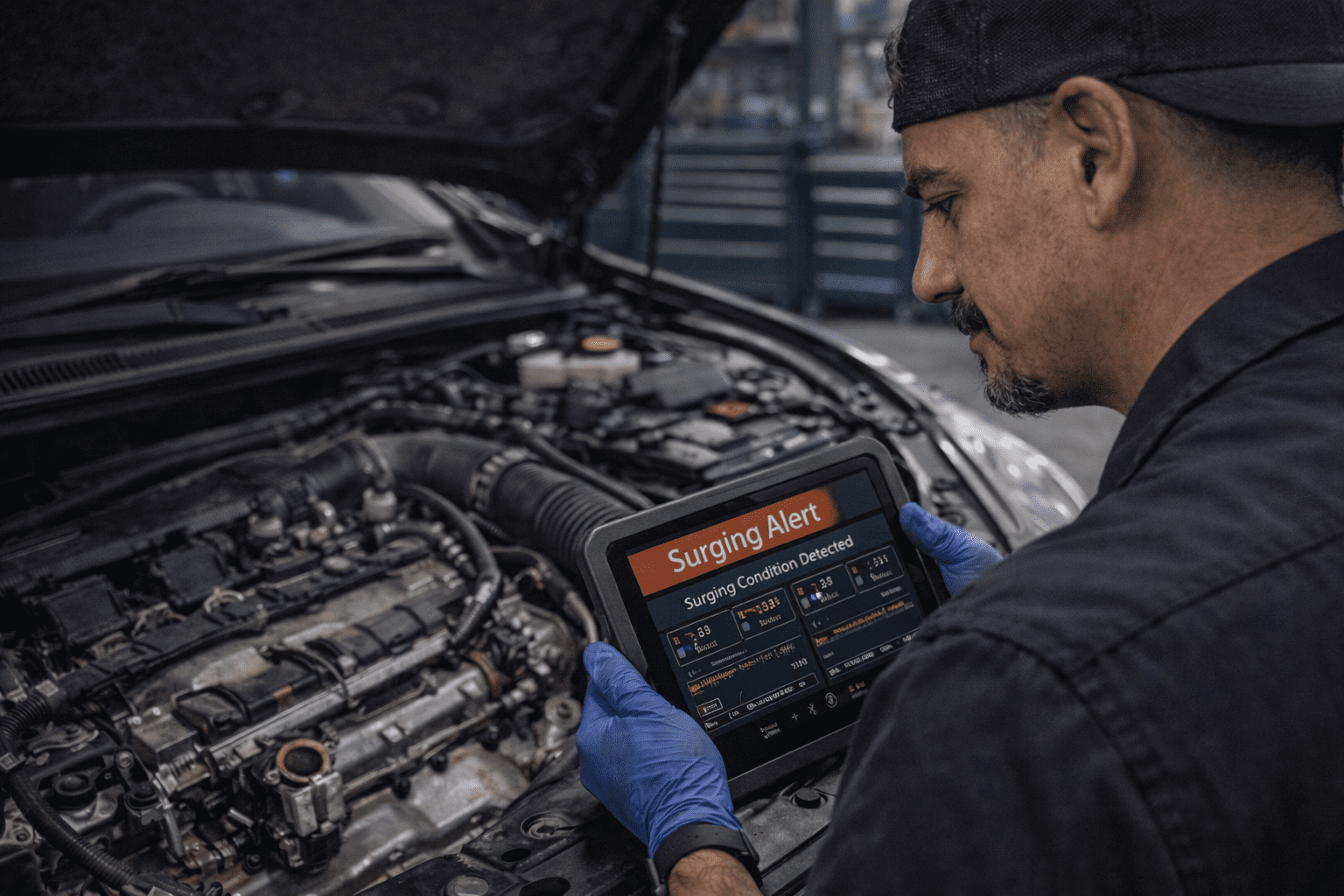
Surging is a repeating rise and fall in RPM or power. It often shows at idle, steady cruise, or light acceleration. The goal is to identify what input or control strategy is unstable.
Small changes in load, temperature, or electrical demand can shift airflow and fueling. We use data to see what changes first and what reacts second.
We often diagnose surging complaints from Peakland, Rivermont, and Bedford drivers where steady speed conditions make control instability easier to feel.
We isolate what is changing, then confirm why it is changing.
These pages help you compare symptoms that overlap with surging.
Idle control relies on accurate airflow and fuel control. Small leaks, sensor errors, or throttle control issues can cause RPM hunting. Testing fuel trims and airflow confirms the source.
Yes. Unmetered air can force the engine control to correct repeatedly, which can feel like a surge. Data and verified leak testing confirm it.
Not always. A repeating misfire can feel like a surge, but surging can also be caused by fueling or throttle control instability. We verify misfire patterning to separate it.
AC adds load and changes idle strategy. If airflow or fuel control is marginal, that extra load can trigger the surge. We test with the AC on to reproduce the condition.
An injector imbalance can create uneven fueling that shows as surging or pulsing. We confirm with data trends and targeted checks before replacing components.
It can, especially at idle or light throttle. We confirm whether airflow control and throttle response are abnormal before cleaning or replacement is recommended.
Tell us when it happens: idle, cruise, light acceleration, hot or cold, and whether the AC changes it. Those details help us recreate the surge quickly.
If your RPM rises and falls or your vehicle surges at steady speed, start with testing that proves whether airflow, fuel control, or throttle strategy is unstable. Serving Lynchburg with support for Wyndhurst, Timberlake, and Madison Heights drivers.