Testing First. Fixing It Right.
Hesitation, stumble, surge, or a flat spot on acceleration can come from fuel delivery under load, airflow measurement errors, ignition breakdown, sensor input faults, or torque management events that feel like an engine issue.
We test first to confirm the cause before any repairs are recommended. You get clear findings and repair options based on verified results.
Serving drivers across Lynchburg including Boonsboro, Wyndhurst, Peakland, Rivermont, Forest, Timberlake, Madison Heights, and Bedford.
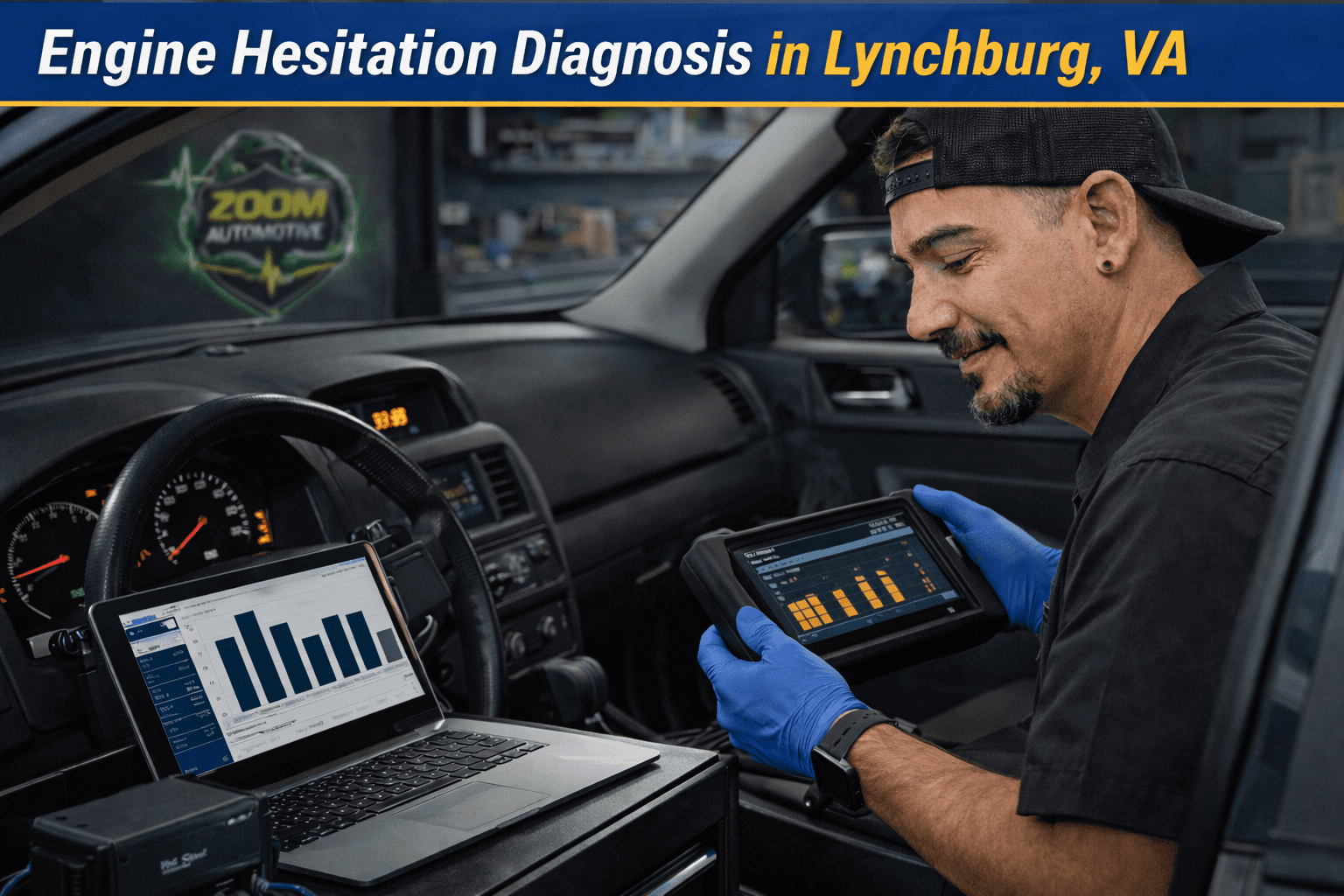
We focus on reproducing the symptom and capturing data while the problem is happening.
Hesitation issues often show up during stop and go driving and merging. We see this often with vehicles driven between Peakland, Rivermont, Forest, and Boonsboro.
If the concern changes to stalling, misfire, loss of power, or reduced power, we use the same testing first approach to confirm the real cause.
Use these pages to match symptoms and intent. This strengthens the engine cluster and supports organic rankings.
Yes. Some faults are intermittent or stay within thresholds that do not set a code. We rely on road test conditions and live data to confirm what is happening.
No. A misfire can cause hesitation, but fuel delivery, airflow measurement, sensor errors, or torque management can feel similar. Testing confirms which system is responsible.
Load increases cylinder pressure and fuel demand. Weak ignition, marginal fuel delivery, or inaccurate airflow readings often show up under load first. We test in the same conditions you feel it.
It can. Shift behavior, converter clutch events, or torque management can mimic an engine stumble. We review data together to separate the source.
Tell us when it happens: cold or hot, steady speed or acceleration, uphill, stop and go, and A/C on or off. Also mention any recent repairs or fuel changes.
If your vehicle hesitates, surges, or stumbles in Lynchburg, we will confirm whether the cause is fuel, ignition, airflow, sensor input, or control strategy related. Serving Wyndhurst, Timberlake, Madison Heights, and Bedford.